What Is a Sticky Trap? Types, Uses, and How to Choose One
Sticky traps are widely used physical pest control products designed to capture insects and certain small pests using a specially coated adhesive surface. They are commonly found in homes, gardens, warehouses, commercial facilities, and agricultural environments.
But what exactly is a sticky trap? How does it work? And how do you choose the right type for different pest control applications?
In this guide, LIMET explains the working principles of sticky traps, their main types, common applications, and important factors to consider when selecting adhesive pest control products.
1. What Is a Sticky Trap?
A sticky trap is a pest control device that uses an adhesive-coated surface to capture insects or other target pests when they come into contact with it.
Unlike conventional traps that rely on mechanical mechanisms, sticky traps use adhesive to hold the target pest in place.
Most sticky traps consist of two basic components:
Backing material: A paper, cardboard, or plastic-based structure that supports the adhesive layer.
Adhesive coating: A specially formulated glue designed to remain tacky during the intended period of use.
Some sticky traps also incorporate visual attractants, such as yellow coloring, to help attract certain flying insects.
Sticky traps are commonly used for two purposes:
Pest monitoring: Helping users identify the presence and activity of insects or other pests.
Physical pest capture: Capturing target pests through direct contact with the adhesive surface.
The effectiveness of a sticky trap depends on its design, adhesive properties, target pest, installation location, and environmental conditions.
2. Main Types of Sticky Traps
Not all sticky traps are designed for the same purpose. Different products have different structures, adhesive properties, and applications.
2.1 Yellow Insect Sticky Traps
Yellow sticky traps are commonly used to monitor and capture certain flying insects, including whiteflies, aphids, fungus gnats, and other small flying pests.
Their yellow surface provides a visual attraction for certain insects, while the adhesive layer captures insects that land on the trap.
Common applications include:
Yellow sticky traps are available in different shapes and sizes, including flat cards, sheets, and roll formats.
2.2 Fly Paper and Fly Ribbons
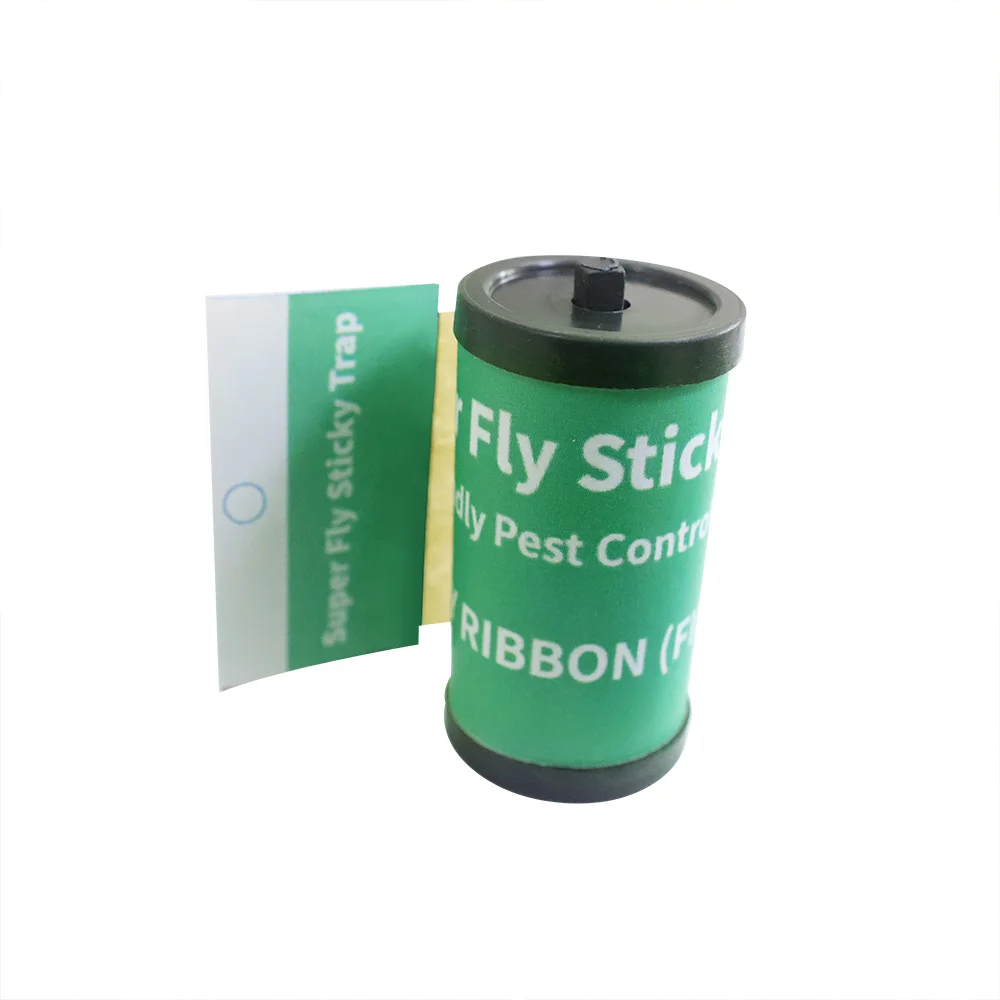
Fly paper and fly ribbons are designed primarily to capture houseflies and other flying insects.
They typically feature an adhesive-coated paper strip or ribbon that can be hung in suitable locations.
Common applications include:
Kitchens and utility areas
Warehouses
Farms and agricultural buildings
Garages and storage areas
Other locations where flying insects are present
Fly ribbons are particularly convenient for hanging applications, while flat fly paper products can be used in different placement arrangements depending on their design.
2.3 Mouse Glue Traps
Mouse glue traps are adhesive-based devices designed to capture mice.
They usually consist of a cardboard or other suitable backing coated with a strong adhesive layer. Some designs can be folded into tunnels or enclosed structures to create a more defined trapping area.
Potential applications include:
When selecting mouse glue traps, buyers should consider the board dimensions, adhesive performance, backing strength, and intended placement.
Glue boards require regular inspection. They should only be used where permitted by local regulations and with appropriate consideration for animal welfare and non-target animals.
2.4 Snake Glue Boards
Snake glue boards are designed for specific snake-capture applications.
Compared with ordinary insect sticky traps, they generally have a larger adhesive area and a different structural design.
Product selection should consider the target species, intended application, local wildlife regulations, and animal welfare requirements.
They should not be treated as interchangeable with ordinary insect sticky traps.
3. How Do Sticky Traps Work?
Sticky traps work through physical adhesion rather than relying on a conventional chemical insecticide or mechanical triggering system.
The general process involves three steps:
Step 1: Placement
The trap is installed in an appropriate location based on the target pest and the product's intended application.
Step 2: Contact
An insect or other target pest comes into contact with the adhesive surface.
Step 3: Adhesion
The adhesive holds the target in place, allowing the user to monitor or manage pest activity.
Several factors can affect performance:
Adhesive formulation and initial tack
Ambient temperature
Humidity
Dust and dirt accumulation
Exposure to direct sunlight
Installation location
Duration of use
For this reason, users should follow product instructions and replace traps when they become dirty, full, or less effective.
4. Where Are Sticky Traps Commonly Used?
Sticky traps have a wide range of applications, depending on the type of product.
| Application | Common Sticky Trap Types |
|---|
| Gardens and greenhouses | Yellow insect sticky traps |
| Warehouses | Fly paper and selected monitoring traps |
| Farms and agricultural buildings | Fly ribbons and insect sticky traps |
| Residential environments | Fly paper and suitable mouse glue traps |
| Indoor pest monitoring | Insect monitoring glue boards |
| Specialized pest management | Purpose-designed snake glue boards |
For commercial environments, sticky traps can form part of an integrated pest management (IPM) program.
They can help users monitor pest activity and identify areas requiring further inspection or control measures.
However, sticky traps are not a complete replacement for sanitation, exclusion, habitat management, or other appropriate pest control methods.
In food-related facilities, placement must follow the facility's hygiene procedures and applicable regulations. Traps should be positioned to avoid contact with food, food-contact surfaces, and processing operations.
5. What Should You Consider When Choosing a Sticky Trap?
For wholesalers, retailers, pest control distributors, and brand owners, choosing the right sticky trap involves more than comparing unit prices.
Here are five important factors.
5.1 Target Pest
First, identify the pest you intend to monitor or capture.
Different pests require different trap structures and adhesive characteristics. Yellow insect cards, fly ribbons, and mouse glue boards should not be treated as interchangeable products.
5.2 Adhesive Performance
The adhesive is one of the most important components of a sticky trap.
Consider:
Initial tack and adhesion
Adhesive coverage
Performance under intended environmental conditions
Resistance to drying or contamination
Consistency between production batches
Actual performance should be evaluated through product testing under the intended conditions.
5.3 Backing Material
The backing material affects the trap's handling, durability, and suitability for different applications.
Common materials include paper, cardboard, and plastic-based substrates.
The appropriate choice depends on the product design, installation method, and intended use.
5.4 Product Size and Design
Different applications require different dimensions and formats.
For example, hanging fly ribbons, flat yellow sticky cards, and mouse glue boards have different structural requirements.
Buyers should confirm product dimensions, packaging formats, and installation requirements before placing an order.
5.5 OEM and ODM Customization
For distributors and private-label brands, customization can be an important purchasing consideration.
Depending on the product and production requirements, customization may include:
Product dimensions
Backing material
Adhesive specifications
Printed branding
Packaging design
Private-label solutions
Buyers should confirm available customization options and minimum order quantities with their supplier.
6. Sticky Traps vs. Other Pest Control Methods
Sticky traps are one option within a broader range of pest management solutions.
| Pest Control Method | Main Working Principle | Typical Considerations |
|---|
| Sticky traps | Adhesive capture | Monitoring and physical capture |
| Insect light traps | Light attraction and capture | Requires electricity and suitable placement |
| Insecticide sprays | Chemical treatment | Product-specific safety and application requirements |
| Mechanical traps | Physical triggering mechanism | Requires suitable positioning and maintenance |
| Exclusion products | Preventing pest access | Requires suitable installation and structural coverage |
Each method serves different purposes.
Sticky traps can be useful where users want a straightforward adhesive-based monitoring or capture solution. However, the appropriate method depends on the target pest, location, regulations, and overall pest management strategy.
7. Why Work with a Professional Sticky Trap Supplier?
For businesses sourcing sticky traps, a reliable supplier should offer more than a product catalog.
Important considerations include:
Consistent product quality
Clear product specifications
Different product formats and applications
Packaging and private-label options
OEM and ODM support
Responsive communication
Export and order coordination
LIMET focuses on physical pest control solutions, including insect sticky traps, fly paper, fly ribbons, and adhesive-based pest capture products.
We work with international buyers, distributors, wholesalers, and brand owners looking for suitable pest control products and customized supply solutions.
8. Frequently Asked Questions About Sticky Traps
What is the main purpose of a sticky trap?
A sticky trap uses an adhesive surface to capture target insects or other pests. It can be used for pest monitoring or physical capture, depending on the product design.
Are sticky traps chemical-free?
Sticky traps generally rely on physical adhesion rather than conventional insecticide-based killing mechanisms. However, the exact product composition should always be confirmed through its technical documentation.
How long does a sticky trap last?
There is no universal service life for all sticky traps. Performance depends on adhesive formulation, temperature, humidity, dust, sunlight exposure, and the number of captured pests.
Replace traps according to the manufacturer's instructions and actual condition.
Are yellow sticky traps effective against all insects?
No. Yellow sticky traps attract and capture certain insects more readily than others. Their effectiveness depends on insect species, visual attraction, placement, and environmental conditions.
Can sticky traps be used in warehouses?
Yes, selected sticky traps can be used in warehouses for monitoring or capturing certain pests. Their placement should be based on the target pest and warehouse hygiene requirements.
What is the difference between fly paper and yellow sticky traps?
Fly paper is primarily designed to capture flies using an adhesive-coated strip or sheet. Yellow sticky traps use a yellow-colored surface to attract and capture certain flying insects, particularly in gardening and agricultural applications.
Can sticky traps be customized for private-label brands?
Depending on the product, suppliers may offer customization options such as dimensions, backing materials, packaging, and printed branding. Buyers should confirm specifications and minimum order quantities before production.
9. Conclusion: Choosing the Right Sticky Trap
Sticky traps are practical physical pest control products used in a variety of residential, commercial, agricultural, and industrial environments.
However, selecting the right product requires understanding the target pest, adhesive performance, backing material, dimensions, and intended application.
From yellow insect sticky cards and fly ribbons to mouse glue boards and specialized adhesive traps, different designs serve different pest management needs.
At LIMET, we focus on physical pest control solutions and support international customers with product selection, OEM/ODM cooperation, and customized supply options.
Looking for a reliable sticky trap supplier?
Contact LIMET to discuss your product requirements and explore suitable solutions for your market.
Website: https://www.lmtrapx.com/
Email: sales@lmtrapx.com