04 December 2025
Whiteflies are common greenhouse and garden pests that can affect a wide range of plants. These small, sap-feeding insects often gather on the undersides of leaves, making early detection difficult.
Yellow sticky traps for whiteflies provide a simple physical monitoring and capture method. Their bright yellow surfaces attract certain flying insects, while the adhesive coating captures insects that land on the trap.
Whether you manage a greenhouse, nursery, garden, or commercial growing facility, understanding how to use yellow sticky traps correctly can help you monitor whitefly activity and make better pest management decisions.
In this guide, LIMET explains how yellow sticky traps work, where to place them, when to replace them, and what to consider when choosing products for professional applications.
Yellow sticky traps are adhesive-coated cards, sheets, or other formats designed to attract and capture certain flying insects.
They are widely used in greenhouses, nurseries, gardens, and agricultural environments for monitoring flying pests, including adult whiteflies.
Most yellow sticky traps consist of two main components:
Yellow backing material: Provides a visual attraction for certain flying insects.
Adhesive coating: Captures insects when they land on the sticky surface.
Yellow sticky traps are available in different shapes, dimensions, and packaging formats to suit different installation requirements.
They are commonly used as part of an Integrated Pest Management (IPM) program, helping growers monitor pest activity and identify potential problems before infestations become more difficult to manage.
It is important to understand that yellow sticky traps primarily capture flying adult insects. They do not directly eliminate whitefly eggs or immature stages attached to plant leaves.
Whiteflies are small insects that are commonly found around the leaves of many garden and greenhouse plants.
Visual cues play an important role in how flying insects locate suitable host plants. Yellow surfaces can attract certain whitefly species, making yellow sticky traps a useful monitoring tool.
When adult whiteflies fly near a yellow sticky trap, some may approach and land on its surface. The adhesive coating then holds them in place.
The effectiveness of this attraction depends on several factors:
Whitefly species and population levels
Trap color and visual characteristics
Placement and visibility
Surrounding vegetation
Light conditions
Environmental conditions
Yellow sticky traps are useful for monitoring, but they should not be considered a complete whitefly control solution.
Yellow sticky traps work through a combination of visual attraction and physical adhesion.
The process can be explained in three steps.
Step 1: Visual Attraction
The yellow surface provides a visual signal that can attract certain flying insects, including adult whiteflies.
Step 2: Insect Contact
When an adult whitefly approaches and lands on the trap, it comes into contact with the adhesive layer.
Step 3: Physical Capture
The adhesive holds the insect on the surface, allowing growers to observe and monitor insect activity.
Unlike insecticide sprays, yellow sticky traps capture insects through physical adhesion rather than chemical killing action.
This makes them a useful addition to monitoring programs where growers want to observe flying pest activity without relying exclusively on chemical treatments.
Correct placement is essential for useful monitoring results.
Yellow sticky traps should be installed in locations where adult whiteflies are likely to fly, while remaining accessible for regular inspection.
Greenhouses provide growing conditions that can support whitefly populations.
Place yellow sticky traps in suitable monitoring locations around growing areas, near plants that are susceptible to whitefly activity, and in areas where flying insects have been observed.
Avoid positioning traps where they interfere with normal greenhouse operations.
Whiteflies are commonly associated with plants such as tomatoes, cucumbers, peppers, and ornamental crops.
Placing monitoring traps near susceptible plants can help growers observe adult whitefly activity.
However, sticky traps should not replace direct plant inspections. Check the undersides of leaves regularly for whitefly eggs, nymphs, and other signs of infestation.
In nurseries and outdoor growing environments, yellow sticky traps can be used to monitor flying insect activity around plant production areas.
Select suitable positions that allow the traps to remain visible and accessible for inspection.
Outdoor traps may be affected by rain, dust, wind, and other environmental conditions. Their placement and replacement schedule should take these factors into account.
Yellow sticky traps may also capture non-target insects, including certain beneficial insects.
For growers using biological control methods, trap placement requires additional consideration.
Position traps carefully and follow the recommendations of your IPM specialist to avoid unnecessary capture of beneficial insects.

One of the main advantages of yellow sticky traps is their usefulness in pest monitoring.
Instead of relying only on visual plant inspections, growers can use captured insects to observe changes in flying pest activity.
A practical monitoring process includes the following steps:
Step 1: Establish Monitoring Locations
Select representative areas throughout the greenhouse or growing facility.
Step 2: Record Installation Dates
Record when each trap is installed so that monitoring periods can be compared.
Step 3: Inspect Traps Regularly
Check the traps at consistent intervals and observe the number and types of insects captured.
Step 4: Record Results
Keep records of insect captures, trap locations, and inspection dates.
Step 5: Compare Changes Over Time
Increasing whitefly captures may indicate rising adult activity and suggest that further plant inspections are necessary.
For more reliable monitoring, use consistent inspection intervals and compare traps under similar conditions.
Remember that the number of captured insects is an indicator of flying insect activity, not a direct measurement of the total whitefly population on plants.
There is no universal replacement interval for every yellow sticky trap.
The appropriate replacement time depends on product specifications, environmental conditions, adhesive performance, and the amount of dust and insects accumulated on the surface.
Consider replacing a trap when:
The adhesive surface is heavily covered with insects.
Dust and debris reduce the exposed sticky area.
The adhesive becomes less effective.
The backing material is damaged.
The trap has been exposed to unfavorable weather conditions.
The manufacturer's recommended service period has been reached.
For commercial growing operations, regular inspection and replacement schedules can help maintain consistent monitoring conditions.
Yellow sticky traps are one part of a broader whitefly management strategy.
Different methods address different stages of the pest's life cycle.
| Method | Main Purpose | Key Considerations |
|---|---|---|
| Yellow sticky traps | Monitor and capture flying adults | Useful for observing adult activity |
| Plant inspection | Identify eggs, nymphs, and adults | Requires regular examination |
| Biological control | Manage whitefly populations using natural enemies | Requires suitable conditions and species selection |
| Insect exclusion netting | Reduce insect entry into growing areas | Depends on installation and mesh specifications |
| Approved insecticides | Manage infestations | Must follow local regulations and label instructions |
For effective whitefly management, growers should combine monitoring with appropriate cultural, biological, physical, and other permitted control methods.
Yellow sticky traps are valuable monitoring tools, but they should not be relied upon as the only method of managing an established infestation.
For greenhouse operators, agricultural distributors, wholesalers, and private-label brands, selecting the right yellow sticky trap involves several considerations.
The adhesive should maintain suitable tackiness under the intended application conditions.
Buyers should consider adhesive coverage, consistency, resistance to environmental conditions, and performance during the expected monitoring period.
The backing material affects product handling, durability, and installation.
Depending on the product design, materials may include paper, cardboard, or plastic-based substrates.
The choice should match the intended application and packaging requirements.
Different growing environments may require different trap sizes and shapes.
Common formats include:
Flat yellow sticky cards
Yellow adhesive sheets
Larger sticky panels
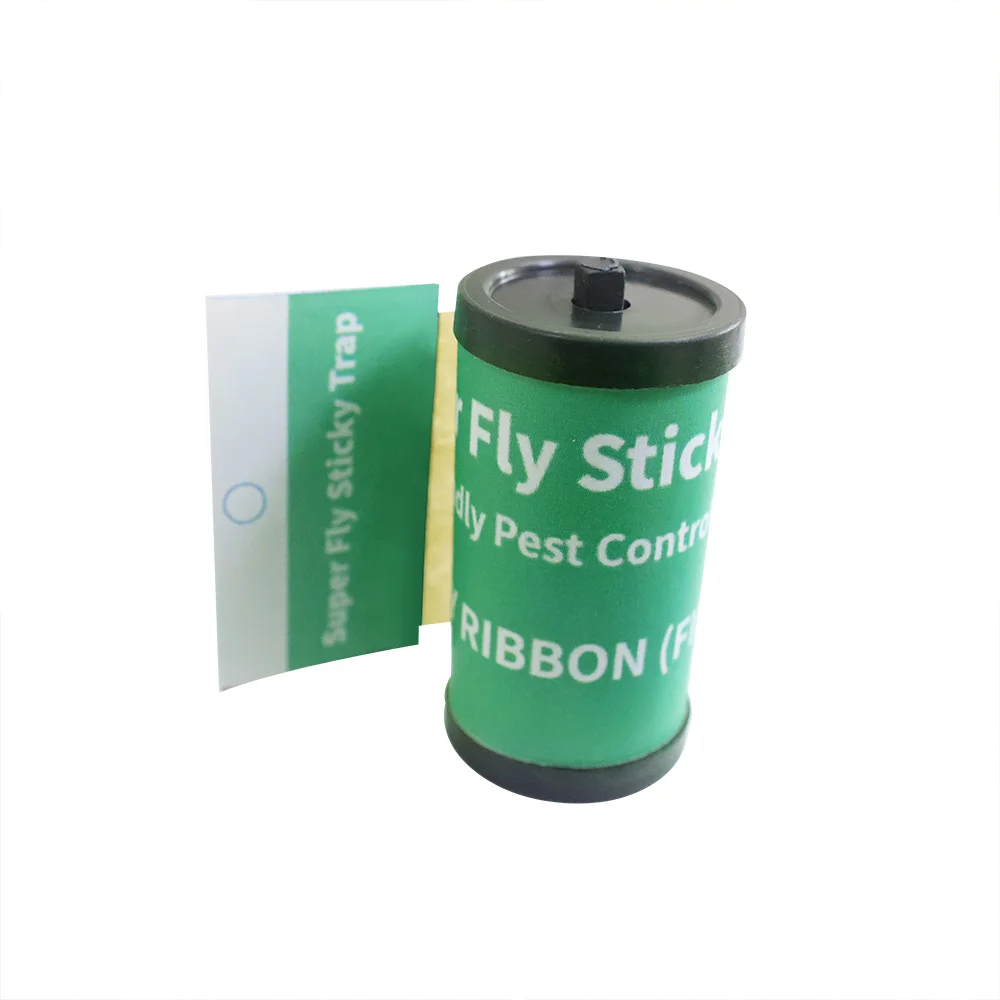
Roll-format sticky products
The appropriate format depends on the installation method and monitoring requirements.
For distributors and brand owners, packaging and product customization can be important purchasing factors.
Depending on the product and order requirements, buyers may discuss:
Product dimensions
Backing material
Adhesive specifications
Printed branding
Individual or bulk packaging
OEM and ODM services
Always confirm the available specifications, minimum order quantities, and customization options with your supplier before placing an order.
LIMET focuses on physical pest control solutions, providing products for different insect and animal management applications.
Our product range includes yellow insect sticky traps, fly paper, fly ribbons, mouse glue traps, and other adhesive-based pest control products.
For international buyers, product selection involves more than simply choosing a sticky surface. Consistent specifications, suitable packaging, product customization, and dependable supply are also important.
LIMET supports customers including:
Agricultural product distributors
Greenhouse supply companies
Garden product retailers
Pest control wholesalers
Private-label brand owners
We also support OEM and ODM cooperation for customers looking for customized product and packaging solutions.
If you are sourcing yellow sticky traps for your market, our team can help discuss suitable product specifications and supply requirements.
Yes. Yellow sticky traps can attract and capture adult whiteflies because certain whitefly species respond to yellow visual cues. Their effectiveness depends on placement, environmental conditions, and pest species.
No. Yellow sticky traps mainly capture flying adult whiteflies. Whitefly eggs and immature stages are generally found on plant surfaces and are not directly controlled by ordinary yellow sticky cards.
In greenhouses, place traps in visible monitoring locations near susceptible crops and areas where whitefly activity has been observed. Regularly inspect both the traps and the undersides of plant leaves.
The appropriate number depends on greenhouse size, crop type, layout, pest pressure, and whether the traps are being used for monitoring or mass trapping. Follow product guidance and recommendations from your IPM specialist rather than applying one fixed number to every greenhouse.
Replace traps when they become covered with insects or dust, lose adhesive effectiveness, or become damaged. Follow the manufacturer's instructions and maintain a consistent inspection schedule.
Yes, selected products can be used outdoors. However, rain, wind, dust, and sunlight may affect their performance. Choose suitable products and inspect them more frequently in exposed environments.
No. Yellow sticky traps are useful for monitoring and capturing adult whiteflies, but they do not eliminate all life stages. For better management, combine monitoring with plant inspections and other suitable IPM measures.
Yes. Yellow sticky traps may capture other flying insects, including non-target and beneficial insects. Consider this when selecting trap locations and monitoring strategies.
Yellow sticky traps are a practical tool for monitoring and capturing adult whiteflies in greenhouses, nurseries, gardens, and other growing environments.
By understanding how these traps work, choosing suitable products, and placing them correctly, growers can obtain useful information about flying insect activity and make more informed pest management decisions.
For the best results, combine sticky trap monitoring with regular plant inspections and an integrated pest management strategy.
Looking for yellow sticky traps for your agricultural or commercial applications?
LIMET provides physical pest control products and supports international buyers with product selection, OEM/ODM cooperation, and customized supply solutions.
Contact LIMET to discuss your requirements.
Website: https://www.lmtrapx.com/
Email: sales@lmtrapx.com

Dec 07, 25
What Is a Sticky Trap? Types, Uses, and How to Choose One
Learn what sticky traps are, how they work, their different types, common applications, and how to choose the right adhesive pest control products.
Nov 04, 25
Comfort Gardening Made Easy with Garden Kneelers for Sale
Gardening should be relaxing, not painful. With our ergonomic garden kneelers for sale, you can enjoy every planting session without stressing your knees or back.

Feb 04, 26
The Ultimate Guide to Choosing a Comfortable Kneeling Pad with Handles
Apr 01, 26
Snake Grabbers: A Practical Snake Catching Tool For Safe And Humane Control
When encountering snakes in residential, agricultural, or wild environments, safety should always be the top priority.