04 December 2025
Fungus gnats are common flying pests found in greenhouses, nurseries, and indoor growing environments. They are often associated with moist growing media and decaying organic matter. Their larvae live in the growing medium, while adult insects fly around plants and growing areas.
Yellow sticky cards provide a simple way to capture and monitor adult fungus gnats. They help growers identify pest activity and evaluate whether additional management measures are needed.
In this guide, LIMET explains how yellow sticky traps work, where to place them, and what commercial buyers should consider when selecting these products.
Fungus gnats are small, dark-colored flies commonly found around potted plants and greenhouse growing media.
Adult fungus gnats are usually noticed flying near plants or resting on nearby surfaces. Their larvae develop in moist growing media and feed on fungi, decaying organic matter, and, in some cases, plant roots.
Common conditions associated with fungus gnat activity include:
Excessively moist growing media.
Poor drainage.
Decaying leaves and organic debris.
High humidity around growing areas.
Regular inspection and moisture management are important parts of preventing fungus gnat problems.

Yellow sticky cards use a bright yellow surface and an adhesive coating to attract and capture flying insects.
Adult fungus gnats are attracted to yellow surfaces and become trapped when they land on the adhesive.
These traps offer two main functions:
Monitoring: Captured insects help growers identify fungus gnat activity and observe changes in adult populations.
Adult population reduction: Trapping flying adults can remove some insects from the growing environment.
However, yellow sticky cards do not directly control eggs or larvae in the growing medium. They should be used together with appropriate soil moisture management and other integrated pest management practices.
Correct placement helps improve monitoring results.
Place yellow sticky cards near the growing media, especially around propagation areas and benches where fungus gnat activity has been observed.
Position cards near potted plants and seedling production areas. Distribute them across different sections to identify locations with higher insect activity.
Place smaller sticky cards close to the soil surface of affected pots. Keep the adhesive surface visible and avoid contact with plant leaves.
Use a consistent placement and inspection routine. Record the number of captured insects to help compare pest activity between different growing sections.
Practical Tip: For fungus gnat monitoring, cards placed close to the growing media are generally more useful than cards positioned high above the plant canopy.
Yellow sticky cards are useful monitoring tools, but they should not be the only management measure.
Consider combining them with the following practices:
Avoid overwatering plants.
Allow the soil surface to dry between watering when suitable for the crop.
Improve drainage where necessary.
Remove dead leaves and decaying organic material.
Inspect new plants before introducing them into growing areas.
Check sticky cards regularly and replace them when covered with insects, dust, or debris.
For more detailed technical guidance, see Virginia Cooperative Extension's Fungus Gnat Management Guide.
Different sticky trap colors and designs serve different monitoring purposes.
| Trap Type | Common Application |
|---|---|
| Yellow Sticky Cards | Fungus gnats, whiteflies, winged aphids |
| Blue Sticky Cards | Particularly useful for monitoring thrips |
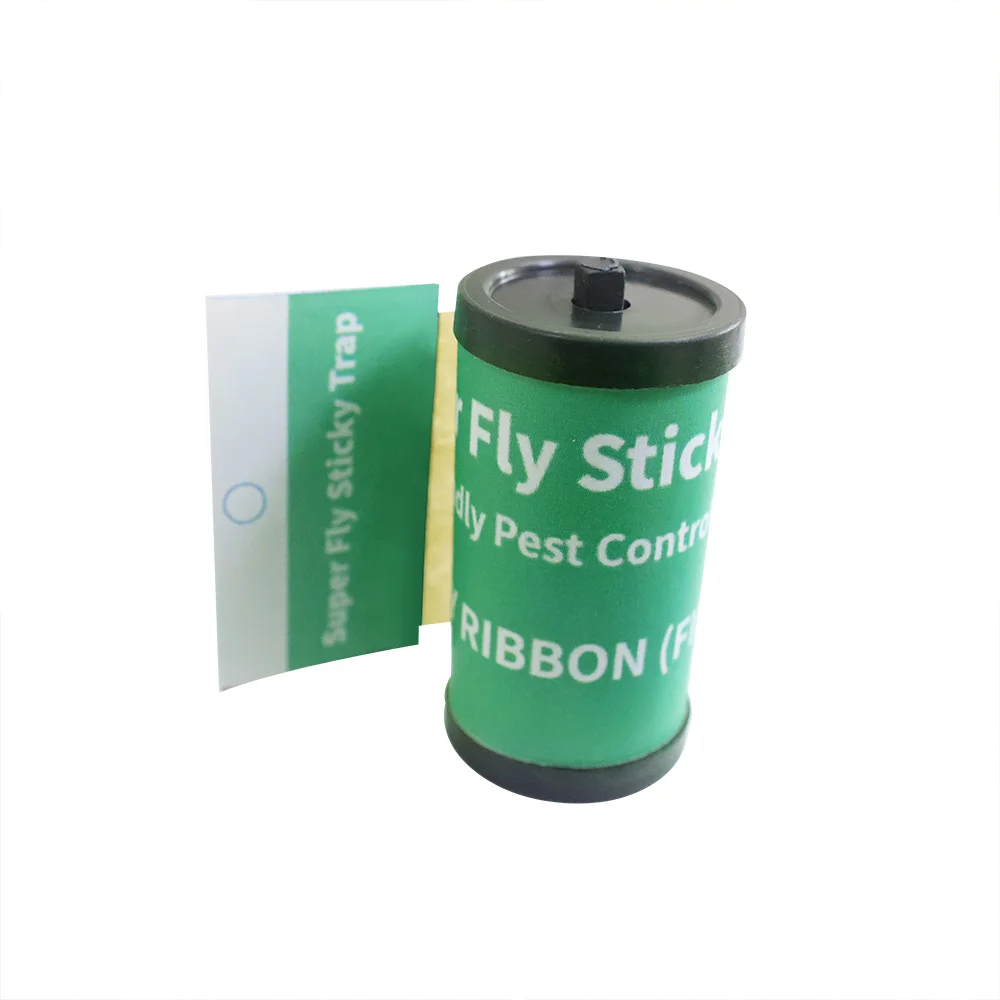
| Yellow Sticky Rolls | Larger growing areas and greenhouse monitoring |
The best option depends on the target insect, growing environment, and monitoring requirements.
For a broader overview, read our guide: Effective Pest Control with Yellow Sticky Trap Use and Best Practices.
For importers, distributors, greenhouse suppliers, and agricultural product retailers, choosing yellow sticky cards involves more than comparing prices.
Consider the following factors:
Material: Check the backing material, thickness, flexibility, and suitability for the intended application.
Adhesive Performance: Evaluate adhesive consistency, insect retention, and performance under expected storage and operating conditions.
Size and Design: Different greenhouse operations may require different card sizes, shapes, and hanging methods.
Packaging: Consider individual packaging, bulk packaging, and protection during transportation and storage.
Customization: Ask about available dimensions, printed logos, packaging designs, and private-label options.
Before confirming a bulk order, request product samples and verify the specifications required for your market.
LIMET provides physical pest control products for international distributors, wholesalers, retailers, and other commercial customers.
Our sticky trap product range offers solutions for different insect-catching applications.
Buyers can discuss product dimensions, adhesive requirements, packaging, and OEM/ODM customization according to their business needs.
Explore our LIMET Animal Traps & Supplies to learn more about our product range.
Q1: Do yellow sticky cards catch fungus gnats?
Yes. Yellow sticky cards can attract and capture adult fungus gnats, making them useful for monitoring their activity in greenhouses, nurseries, and indoor plants.
Q2: Do yellow sticky traps kill fungus gnat larvae?
No. Sticky cards capture flying adults but do not directly affect eggs or larvae in the growing medium. Soil moisture management and other appropriate control measures are also important.
Q3: Where should yellow sticky cards be placed for fungus gnats?
Place them close to the growing media or soil surface, particularly around affected plants and propagation areas.
Q4: When should yellow sticky cards be replaced?
Replace them when the adhesive surface becomes covered with insects, dust, or debris, or when the adhesive no longer performs effectively.
Q5: Can yellow sticky cards be used in commercial greenhouses?
Yes. They are commonly used in greenhouse monitoring programs to detect adult fungus gnat activity and help growers evaluate pest management measures.
Yellow sticky cards are a practical monitoring tool for fungus gnats in greenhouses, nurseries, and indoor growing environments.
Whether you are sourcing products for agricultural distribution, retail sales, or a private-label brand, selecting the right specifications and packaging is essential.
LIMET welcomes inquiries from international buyers interested in sticky traps and physical pest control solutions.
Contact LIMET to discuss wholesale orders and OEM/ODM requirements.
Email: sales@lmtrapx.com
Website: https://www.lmtrapx.com/

Dec 04, 25
Yellow Sticky Traps for Insect Monitoring | LIMET
Discover yellow sticky traps for monitoring flying insects in greenhouses, agricultural facilities, warehouses and commercial environments. LIMET offers wholesale supply and OEM/ODM solutions.
Feb 02, 26
Leading Anti Bird Net Manufacturers Delivering Crop and Infrastructure Protection

Feb 02, 26
Comprehensive Guide to Effective Blue Sticky Trap Use for Pest Control
Nov 27, 25
Rodent infestations present a significant challenge for homeowners, property managers, and agricultural professionals alike.