Humane live animal traps provide a practical solution for capturing animals alive in situations where non-lethal capture is appropriate and legally permitted. Commonly used in residential areas, gardens, farms, and property management, these traps are designed to contain animals for subsequent handling in accordance with local wildlife regulations.
For distributors, wholesalers, retailers, and pest control professionals, choosing the right live animal trap involves more than simply selecting a cage. Material quality, trap dimensions, construction, target animal size, and ease of use all play important roles.
LIMET specializes in physical pest control solutions, offering galvanized steel wire live animal traps for different applications. Our product range includes traps designed for squirrels, raccoons, foxes, and skunks, with multiple length options and OEM/ODM customization services.
Whether you are sourcing products for wholesale distribution or developing your own private-label range, understanding the differences between live animal trap types can help you make a more informed purchasing decision.

Humane live animal traps are cage-style devices designed to capture and contain animals without intentionally killing them. Unlike snap traps or other lethal control products, live capture cages are intended to keep the captured animal alive until it can be handled appropriately.
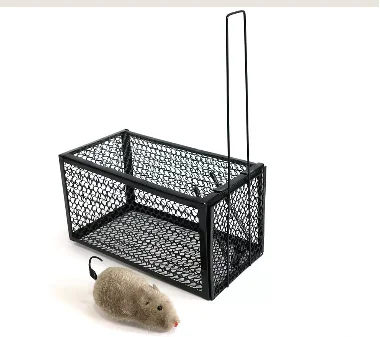
Metal cage traps generally consist of a wire mesh enclosure, an entry door, and a triggering mechanism. When an animal enters the cage and activates the mechanism, the door closes, containing the animal inside.
The exact construction and operating mechanism may vary depending on the trap model.
Live capture traps are commonly considered for situations involving:
Wildlife activity around gardens and residential properties.
Animal intrusion into farms and storage areas.
Property maintenance and professional pest management.
Non-lethal animal capture where permitted by local regulations.
It is important to understand that live capture does not automatically guarantee that an animal will experience no stress or injury. Correct trap selection, placement, frequent monitoring, and compliance with local animal welfare requirements are essential.
Material selection is an important consideration when purchasing metal animal traps.
LIMET's metal live animal traps are made from galvanized steel wire. Galvanization provides a protective zinc coating that helps reduce corrosion and makes the wire suitable for various outdoor applications.
Key material considerations include:
The galvanized surface helps protect the steel wire against rust and corrosion. This is particularly important for products intended for use in outdoor environments.
Steel wire construction provides the structural framework needed to form an enclosed capture cage. The wire arrangement and overall construction should be evaluated according to the intended target animal and application.
Metal cage traps can be reused when they remain structurally sound and are properly cleaned and maintained between uses.
The design of a cage trap affects its transportation, storage, installation, and daily handling. Buyers should consider the overall dimensions and packaging requirements when selecting products for retail or wholesale distribution.

Different animals have different physical characteristics and behaviors. Therefore, selecting a suitable cage trap requires consideration of the target species, trap dimensions, and local regulations.
LIMET offers several types of metal live animal traps for different animal control applhttp://www.lmtrap.comhttps://www.lmtrapx.comhttps://www.lmtrapx.comications.
Squirrel live traps are designed for capturing squirrels in situations where live capture is appropriate and legally permitted.
These traps are commonly considered for gardens, yards, agricultural properties, and other outdoor areas where squirrel activity may cause damage.
When selecting a squirrel cage trap, buyers should consider:
Overall trap length and enclosure dimensions.
Entry opening size.
Wire construction and structural stability.
Trigger mechanism design.
Ease of inspection and maintenance.https://www.lmtrapx.com
A suitable trap should provide sufficient internal space for the intended target animal without unnecessarily oversized dimensions.
Raccoons are larger and generally stronger than squirrels, so their cage traps require appropriate dimensions and construction.
Raccoon live traps are used in certain residential, agricultural, and professional wildlife management applications.
Important purchasing considerations include:
Adequate internal space for the target animal.
Appropriate wire construction.
Reliable door and locking mechanisms.
Structural stability during transportation and use.
Practical access for inspection and maintenance.
Buyers should always check the actual product dimensions rather than relying on the product name alone.
Fox live traps are designed for applications involving larger wild animals. Choosing an appropriate model requires particular attention to enclosure dimensions and construction.
When evaluating a fox cage trap, consider:
Overall length, width, and height.
Entry opening dimensions.
Wire thickness and construction details.
Door design and locking structure.
Intended animal size and local wildlife requirements.
The trap should be selected according to the specific model specifications and applicable animal welfare regulations.
Skunk live traps are used in certain wildlife management and property maintenance situations.
Because skunks may respond defensively when frightened or confined, trap selection and handling procedures require special care.
Buyers should evaluate the following:
Suitable cage dimensions.
Secure door construction.
Stable wire mesh structure.
Ease of inspection.
Safe handling requirements.
Always follow applicable local guidance for skunk capture and handling. Professional assistance may be necessary.
Choosing the correct trap size is one of the most important parts of product selection.
Different target animals require different enclosure dimensions. Buyers should compare the overall length, width, height, and entrance size of each model before making a purchasing decision.
LIMET offers multiple length options to support different product requirements.
| Available Length | Measurement |
|---|---|
| 24 inches | 24 in |
| 26 inches | 26 in |
| 31 inches | 31 in |
| 37 inches | 37 in |
| 42 inches | 42 in |
| 59 inches | 59 in |
These options provide flexibility for different animal trap product ranges and purchasing requirements.
The appropriate model should be selected based on the target animal, actual cage dimensions, entrance size, and intended application.
Please contact LIMET for detailed specifications, including the width, height, wire diameter, and other construction details of individual models.
For distributors and wholesalers, offering several size options can help build a more complete product range for different customer requirements.
Selecting an appropriate animal cage trap involves several factors. A trap that is suitable for one animal may not be appropriate for another.
Start by identifying the animal involved and understanding its approximate size and behavior.
Squirrels, raccoons, foxes, and skunks have different physical characteristics. The trap should provide sufficient space and an appropriate entry opening for the intended species.
Do not compare products using length alone.
The overall length, width, height, entrance dimensions, and internal space all affect suitability.
Before purchasing, request the complete specification sheet for each model.
Galvanized steel wire is a practical material for metal cage traps because its zinc coating helps protect the steel against corrosion.
Buyers should also examine the wire construction, joints, frame, and door components.
The door and triggering system are essential parts of a live capture cage.
Check how the door operates, how it locks after activation, and whether the mechanism is suitable for the intended application.
Reusable cage traps should be inspected and cleaned after use. Damaged wires, loose joints, or malfunctioning doors should be addressed before the trap is used again.
Animal capture and relocation rules vary between countries, states, and local jurisdictions.
Always check whether the target species may legally be captured and whether permits, inspection schedules, or professional handling procedures are required.
Metal live animal traps are used in a variety of settings where appropriate non-lethal animal capture is required.
Wildlife activity in residential outdoor spaces can create challenges for property owners. Suitable live capture equipment may be considered where permitted by local regulations.
Animal activity around agricultural facilities and storage areas may require appropriate management measures.
The choice of trap should reflect the target species, location, and relevant animal welfare requirements.
Pest control professionals and wildlife management operators may require different cage sizes and configurations for their service applications.
A range of trap dimensions can help distributors serve customers with different equipment requirements.
For retailers and wholesalers, metal live animal traps are a product category that can be developed around several target animal types and size options.
Offering a range of models helps buyers serve different market segments and customer preferences.
For importers, wholesalers, distributors, and private-label brands, product customization is an important part of building a competitive product range.
LIMET supports OEM and ODM services for metal live animal traps.
Depending on project requirements and technical feasibility, customization discussions may cover:
Product dimensions and model selection.
Packaging design.
Private-label branding.
Product labels and printed materials.
Carton specifications.
Product presentation for different markets.
If you are developing your own animal trap brand or expanding an existing product range, LIMET can discuss suitable product configurations and customization requirements.
Please provide your target market, preferred product dimensions, estimated order quantity, and packaging requirements when making an inquiry.
Selecting a reliable supplier involves more than comparing unit prices.
Before placing a wholesale order, buyers should evaluate several important factors.
Product Specifications
Request detailed dimensions, wire material information, product photographs, and available model options.
Product Consistency
Confirm that the product specifications and construction remain consistent with the approved samples and purchase requirements.
Packaging
Discuss individual packaging, carton quantities, shipping dimensions, and labeling requirements.
Customization Capability
If you are developing a private-label product, confirm the available OEM/ODM options and customization process.
Communication and Documentation
Clear product specifications and communication help reduce misunderstandings during sourcing and order fulfillment.
Working with a supplier that understands product requirements and international trade expectations can make the purchasing process more efficient.
LIMET metal live animal traps are made from galvanized steel wire. The galvanized coating helps improve corrosion resistance for different applications.
LIMET offers several length options, including 24, 26, 31, 37, 42, and 59 inches. Width, height, and other specifications vary by model. Contact us for detailed product dimensions.
Our product range includes metal cage traps for squirrels, raccoons, foxes, and skunks. The appropriate model depends on the animal's size, trap dimensions, and intended application.
Yes. Metal cage traps can generally be reused when they remain in good condition and are properly inspected and maintained. Always check the door, trigger mechanism, wire structure, and joints before reuse.
Yes. LIMET supports OEM and ODM customization for suitable products. Buyers can discuss product specifications, packaging, labeling, and private-label requirements with our team.
Consider the target animal, overall cage dimensions, entrance size, material, and intended application. Request detailed product specifications before selecting a model.
No. Wildlife capture, handling, and relocation regulations vary by location and species. Buyers and end users should check applicable local laws before purchasing or using these products.
LIMET focuses on physical pest control solutions and animal capture products for international markets.
Our metal live animal trap range is designed to support different product requirements, including squirrel, raccoon, fox, and skunk capture applications.
Working with LIMET offers buyers several sourcing advantages:
Galvanized steel wire metal cage trap options.
Multiple product lengths from 24 to 59 inches.
Product choices for different target animals.
OEM and ODM customization support.
Product sourcing and international trade experience.
Whether you are a wholesaler, importer, retailer, distributor, or private-label brand owner, we welcome inquiries about our live animal trap range.
Looking for a reliable live animal trap supplier?
Contact LIMET to discuss available models, product specifications, customization options, and wholesale requirements.
Visit LIMET to explore our physical pest control solutions and contact our team for product inquiries.

The LIMET Editorial Team writes and reviews the buyer guides published by
Hebei Limet Industrial Co., Ltd., an integrated manufacturer of pest control
products and household items founded in 2019 in Hebei, China. Every
specification, packaging quantity and ordering detail we publish is checked
against factory records before release, so the figures buyers rely on match
what ships. We cover animal traps, glue boards, bird spikes and netting, snake
tongs and garden items, and we answer sourcing and documentation questions
directly at sales@lmtrapx.com.